
VoIP gateways and session border controllers
beroNet builds the hardware that keeps existing telephony working while the network around it moves to SIP — ISDN, analog and LTE on one side, SIP on the other. Developed and manufactured in Germany.
What the device does
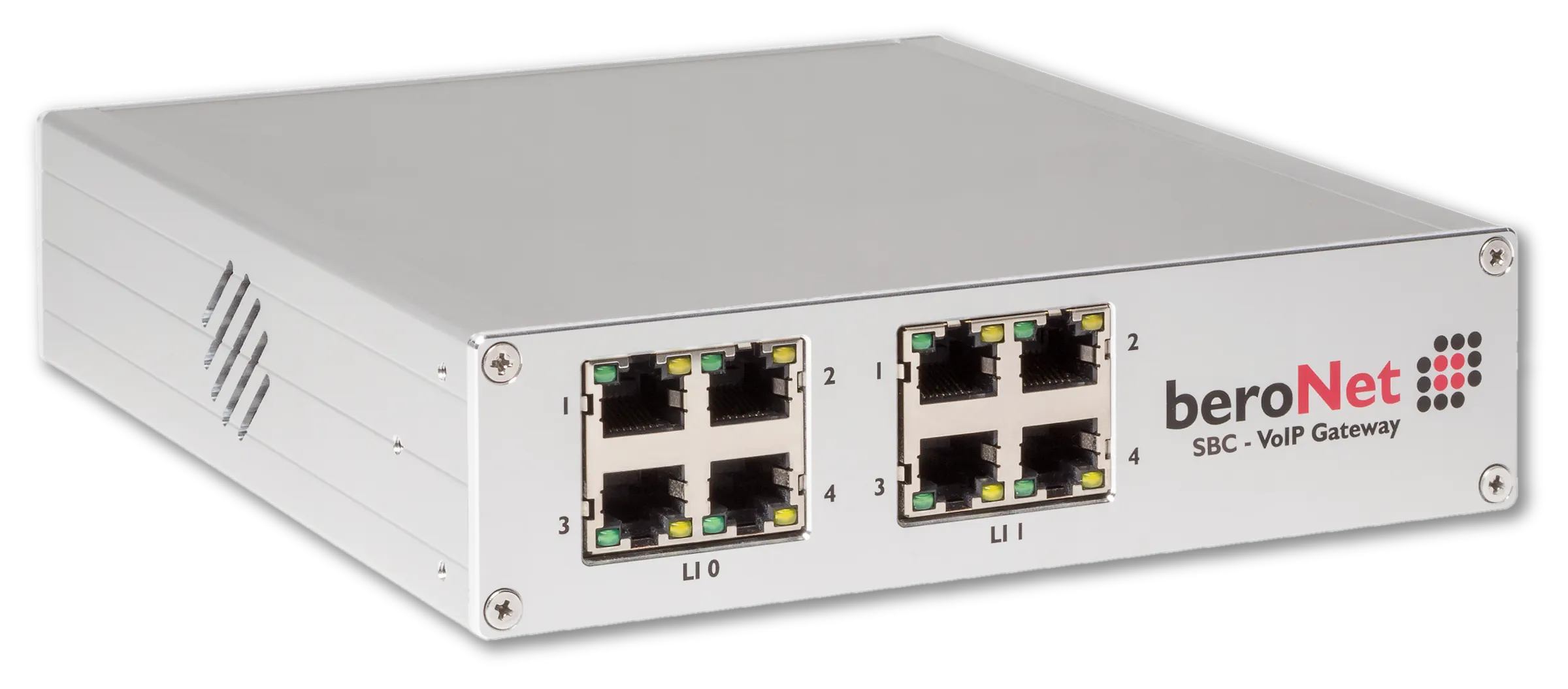
On one side the lines that already exist — ISDN, analog or mobile. On the other side SIP: a provider trunk, an IP PBX, or both. Every device runs the same beroNet OS and can be managed remotely from the beroCloud.
The range
- Enterprise SBC
One platform, two capacity classes, six module types — the interface mix follows the site, not the catalogue.
- Small Business Line
Fixed interfaces, one job, entry-level price — for sites whose wiring is not going to change again.
- VoLTE SBC
Successor to the GSM gateway: voice over LTE, with fallback to 2G and 3G.
- vSBC
The software of the beroNet hardware SBCs as a virtual machine, for transparent SIP-to-SIP sessions.
- uCPE
The branch server that is also the gateway: PBX, router and firewall as VMs, telephony interfaces on the same chassis.
- beroCAPI
The CAPI interface stays where the application expects it; the ISDN line moves to a gateway on the network.
- ISDN gateways
The ISDN side of the modular platform: one housing, one web interface, from two BRI ports to 60 PRI channels.
- Analogue gateways
For everything that will never speak SIP: fax, alarm diallers, door intercoms, lift emergency telephones.
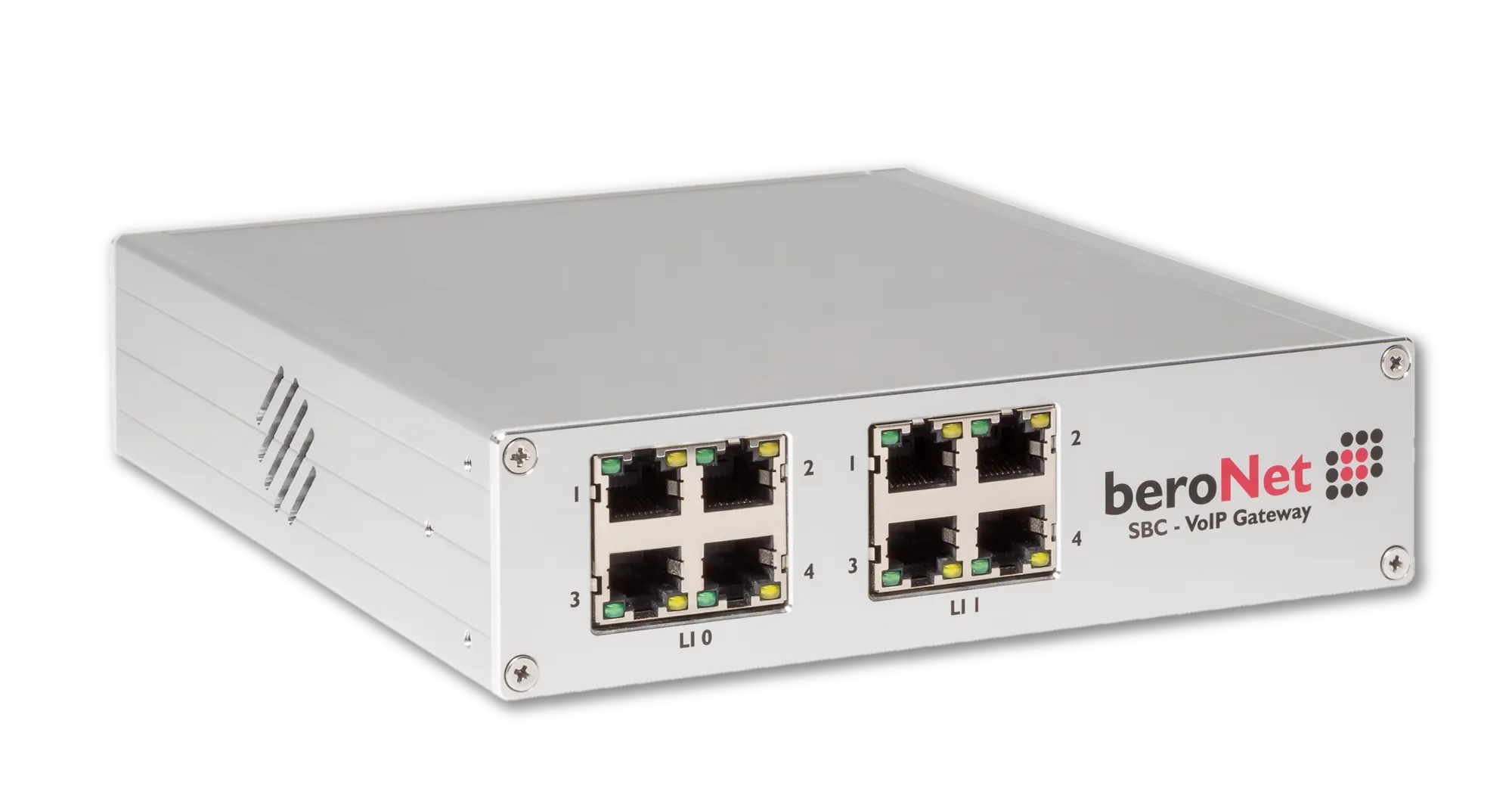
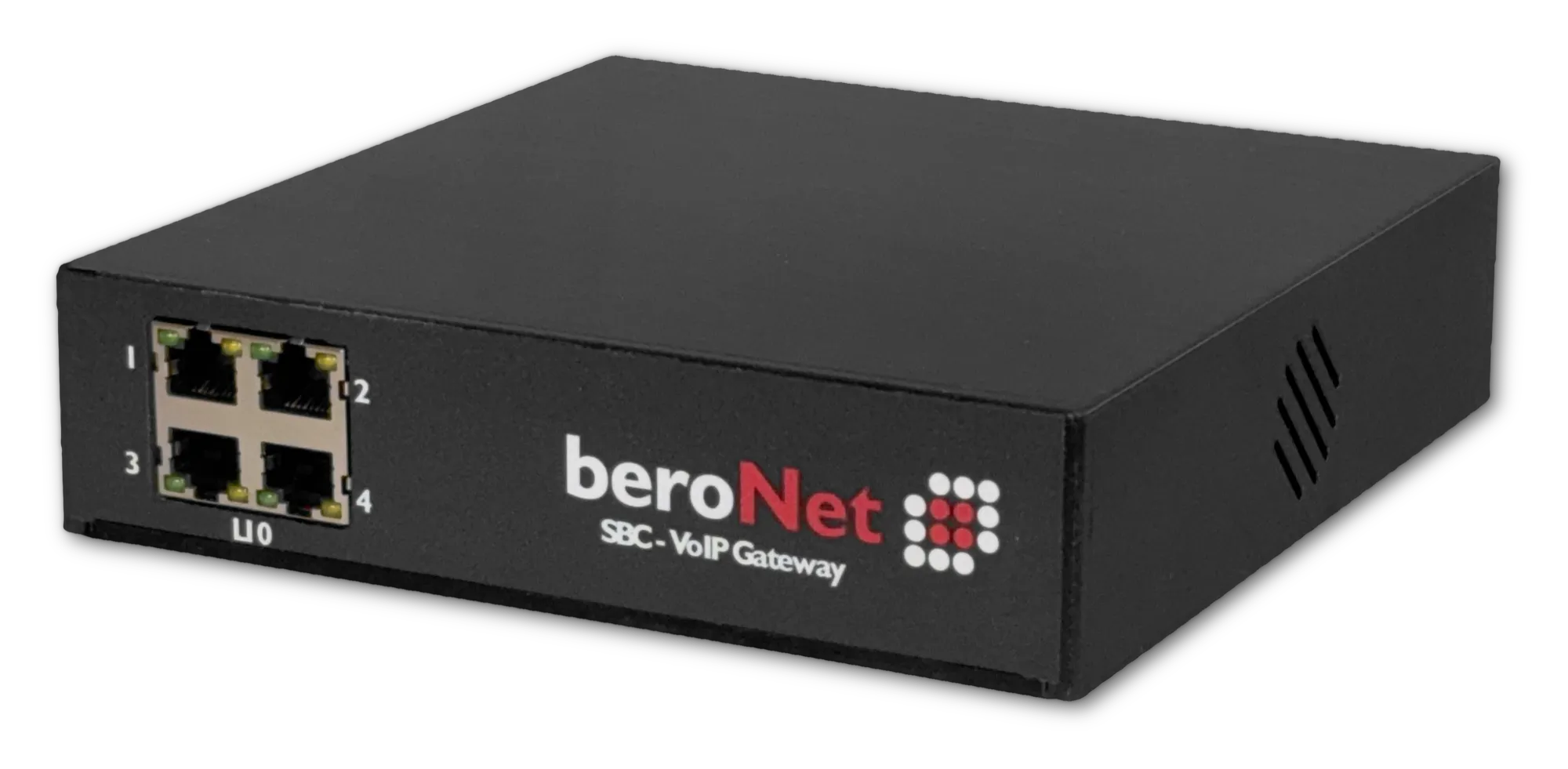
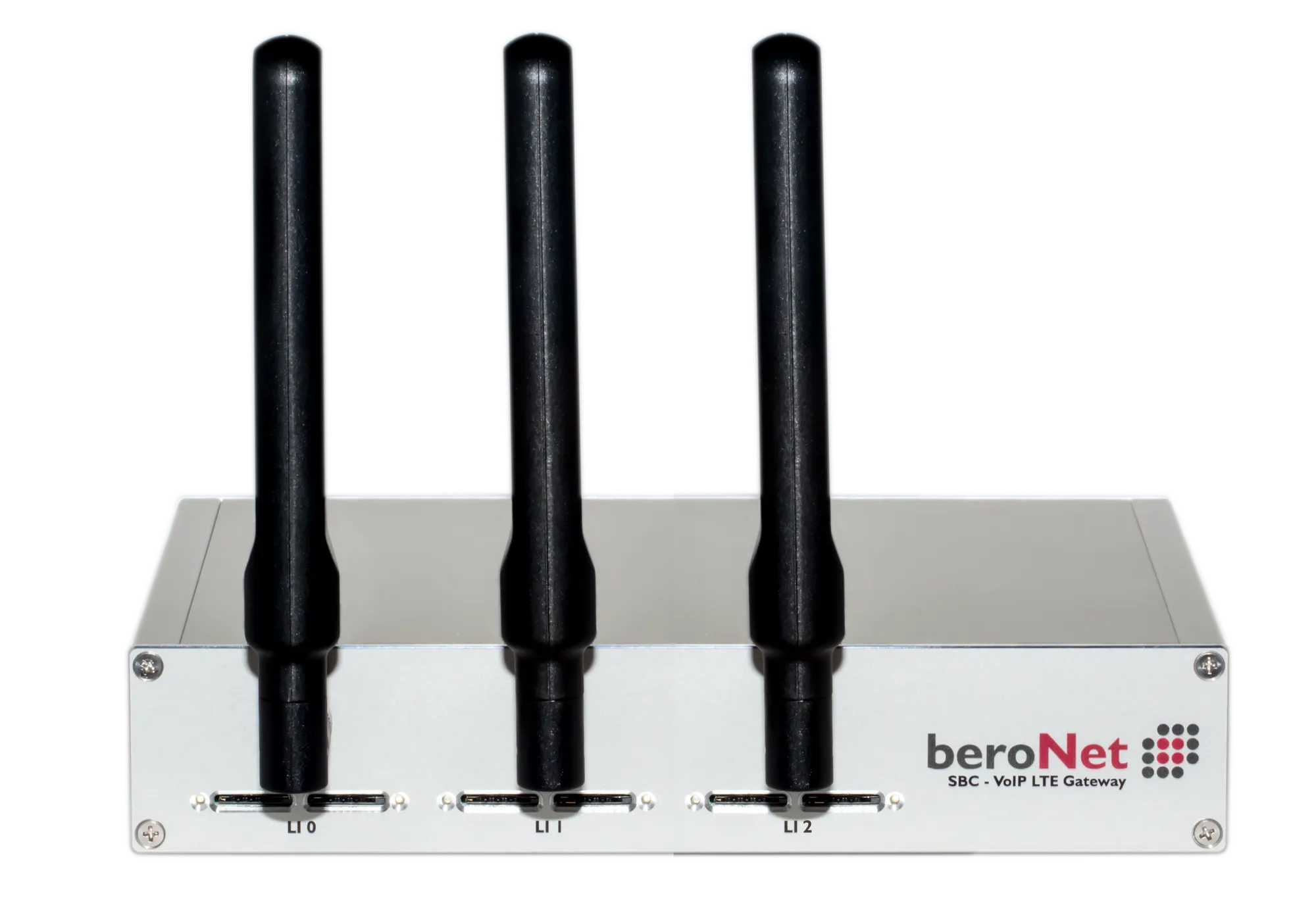
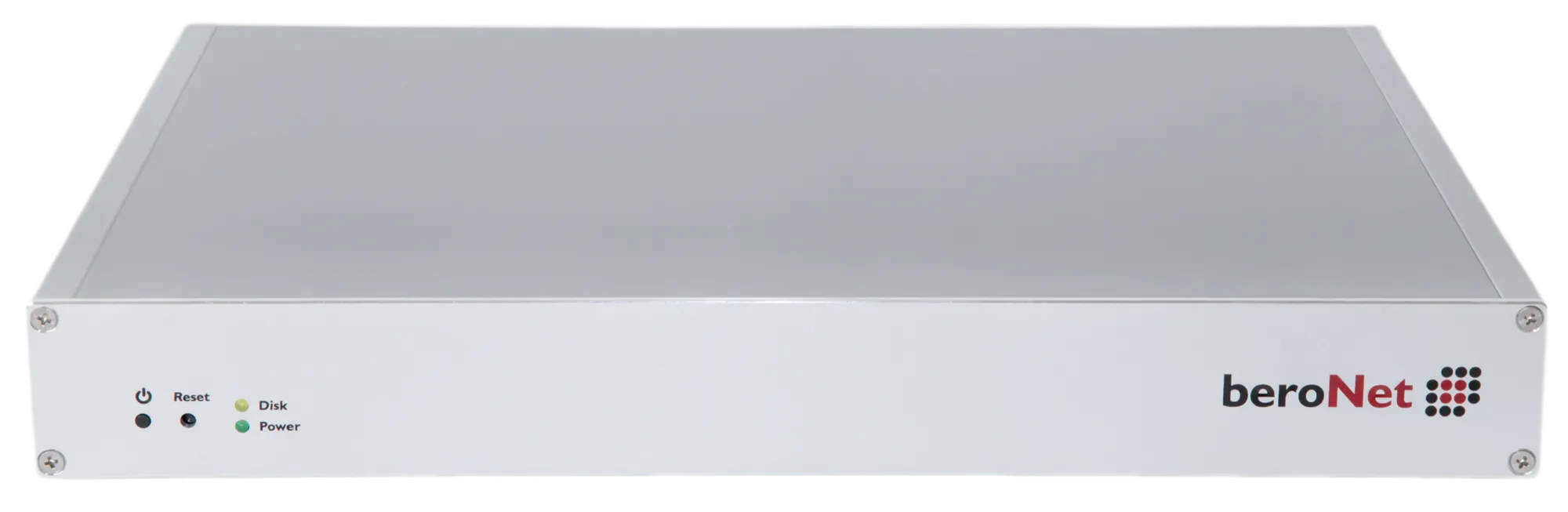
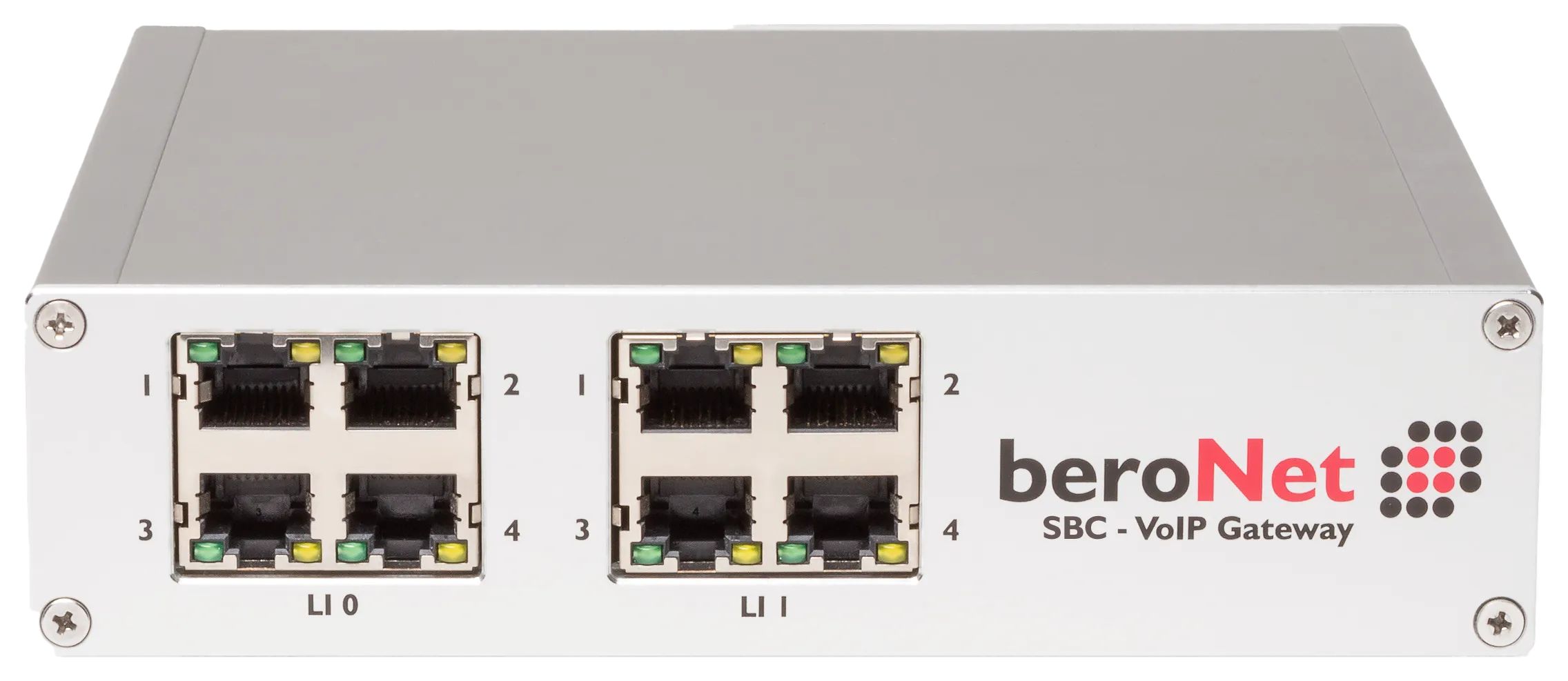
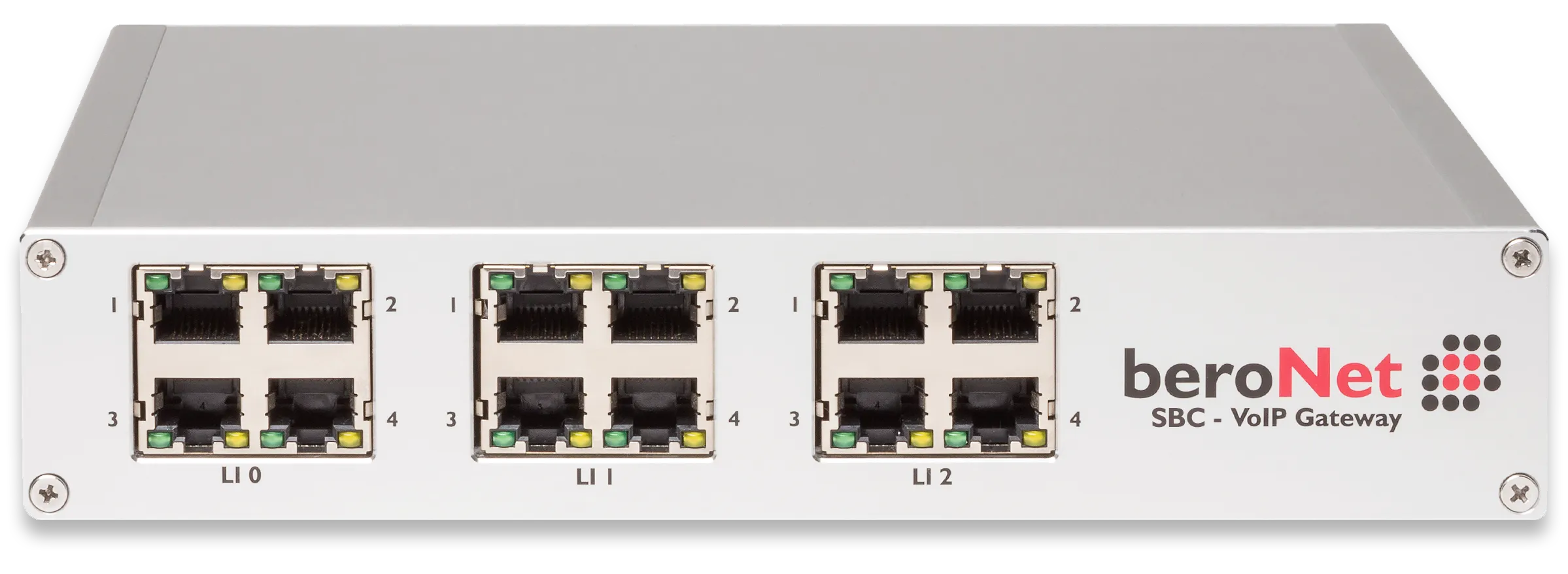
All families, with the comparison table
beroNet Cloud: remote management without an open port
The device opens the connection, not the cloud. A beroNet gateway sends an HTTPS request outward about once a minute, reports its state and picks up whatever task is waiting for it — nothing from the outside has to reach into the customer network, no inbound port has to be opened in the firewall, and NAT is not a problem. From the browser you watch a whole fleet, roll out configuration and firmware updates across it, scheduled if you want, get a notification when a device drops out, and back up and restore a device configuration. How the beroNet Cloud works, or sign up at berocloud.beronet.com — the first 30 days are free.
Start from the situation
The provider switches off ISDN
The PBX works and stays. A BRI or PRI gateway puts the SIP trunk in front of it.
How that worksAnalog devices have to survive
Fax, door intercoms, lift emergency phones. An FXS gateway bridges them in hardware.
How that worksThe line must not be the single point of failure
LTE as a second path, or a failover switch that re-routes the lines physically.
How that worksTwo sites, two PBX systems
SIP to SIP bridges both and normalises what they disagree about — the SBC role.
How that works
One module system across the range
A modular gateway takes up to two modules — BRI, PRI, FXS, FXO or LTE — in a single chassis. The installation decides the configuration, not the catalogue. Ports can be switched between NT and TE mode in the web interface; no jumpers, no rebuild.
- Since 2002Developed and manufactured in Germany.
- One OSEvery device runs beroNet OS and answers the same REST API.
- No licenceISDN, analog and LTE to SIP is included. Only SIP to SIP needs one.
- 2 + 3 yearsTwo years warranty, extendable to five.
Works with standards compliant PBX systems — among others 3CX, STARFACE, pascom, IPTAM and snom.
Where to buy
Order the current configurations directly in the beroNet shop, or through a distributor in your country. Not sure which configuration fits? Describe the installation and we will name it.
Support and documentation
Technical documentation lives in the beroNet Wiki, support requests go through the Service Desk. Both are open to every customer during the warranty period.